

The Importance of HVAC System Evaluation in Commercial Building Inspections
Introduction: Why Mechanical Systems Matter in Commercial Real Estate
In commercial real estate, the condition and performance of a building’s mechanical systems directly affect investment risk, operational expenses, and occupant comfort. Among these systems, heating, ventilation, and air conditioning (HVAC) represents one of the most complex, and costly, components to evaluate. During a Property Condition Assessment (PCA) or comprehensive commercial building inspection, an HVAC evaluation provides crucial insight into a property’s immediate and long-term financial implications.
According to ASTM E2018, the industry standard that governs Property Condition Assessments, inspectors must identify and report on the physical condition of the building’s systems, including mechanical equipment. This involves determining not just whether a system operates, but whether it performs as intended, complies with modern standards, and is suitable for continued service.
For investors, brokers, lenders, and property owners, an accurate HVAC evaluation can mean the difference between a confident acquisition and an unforeseen capital expenditure.
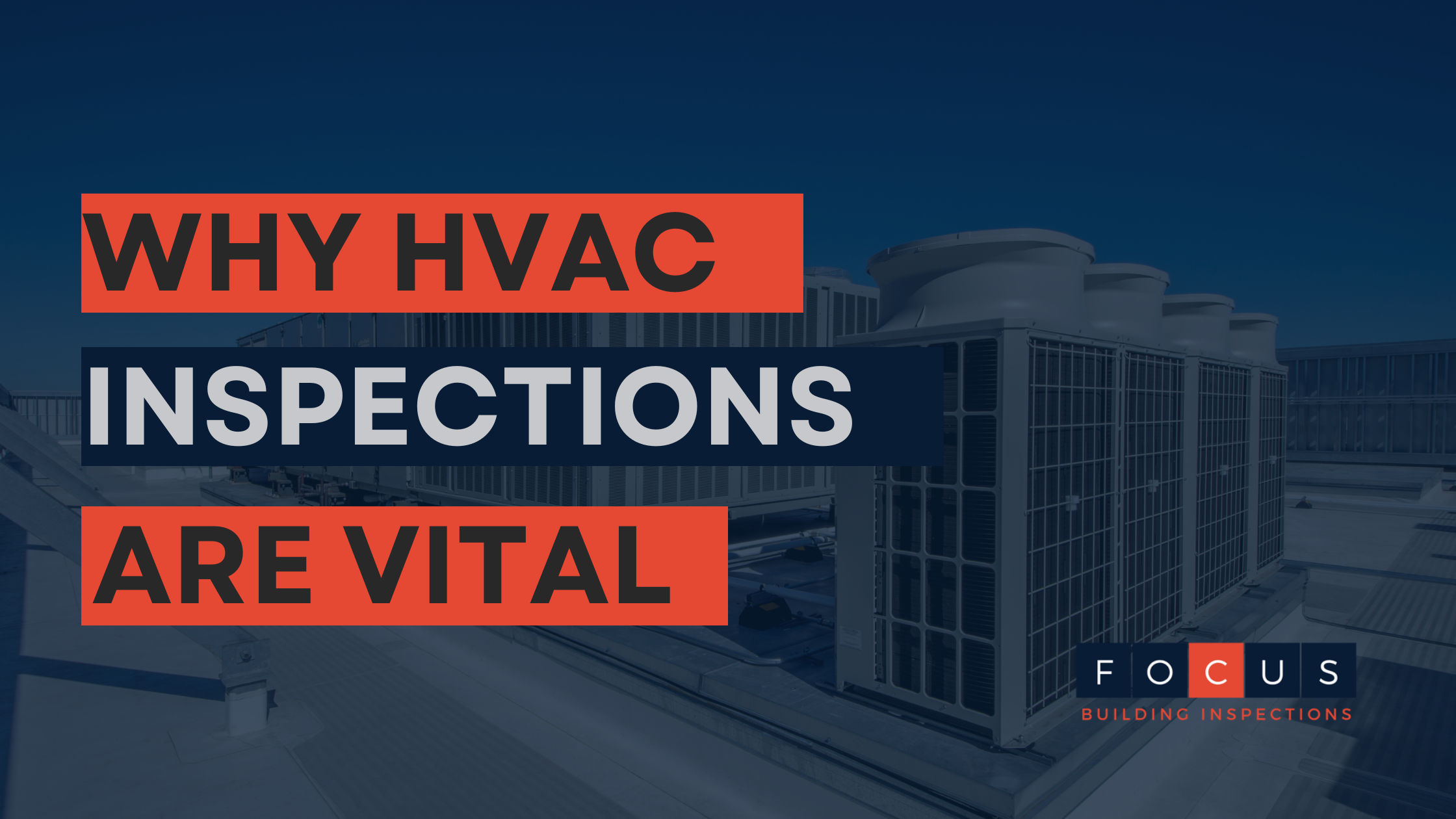
The Importance of HVAC System Evaluation in Commercial Building Inspections
The Role of HVAC Systems in Building Performance
An HVAC system is responsible for more than just temperature control. It governs indoor air quality, humidity, and energy efficiency—factors that influence a building’s operational stability and tenant satisfaction. In commercial spaces such as churches, schools, and multi-tenant office buildings, the HVAC system also directly impacts health, safety, and regulatory compliance.
Typical HVAC configurations found in commercial properties include:
Packaged rooftop units (RTUs)
Split systems (common in smaller retail or office spaces)
Chilled-water systems (used in large campuses or industrial facilities)
Boilers and hydronic heating systems
Variable Refrigerant Flow (VRF) systems in modern buildings
Each of these systems has unique maintenance requirements, expected service lives, and replacement costs. A PCA or ADA inspection that omits a detailed HVAC review risks underestimating the true condition of the asset.
How HVAC Evaluation Fits into a Property Condition Assessment (PCA)
A Property Condition Assessment (PCA), following ASTM E2018, requires the inspector to observe and evaluate the major systems and components of the building. The HVAC review typically includes:
Visual examination of equipment – Identifying make, model, age, and apparent condition.
Functional observation – Confirming operational performance (where safely accessible).
Assessment of maintenance history – Reviewing service records and replacement logs.
Identification of deficiencies – Documenting deferred maintenance, code issues, or inefficiencies.
Estimation of remaining useful life (RUL) – Comparing equipment age to expected service life benchmarks.
Projection of repair or replacement costs – Feeding into the Cost-to-Cure Report (a 10-year capital forecast).
These findings are then incorporated into the Opinion of Costs, which enables investors and lenders to plan for near-term repairs and long-term capital improvements.
Investor Confidence and Financial Forecasting
For investors and portfolio owners, particularly REITs and institutional clients—the HVAC system represents a major line item in operating expense forecasts. Replacing a rooftop unit can cost anywhere from $10 to $25 per square foot, depending on system complexity and tonnage. A failed chiller or boiler in a multi-building complex can easily exceed six figures.
Without an accurate evaluation, an investor might misjudge the property’s net operating income (NOI) and capital reserve requirements. The consequences often appear after acquisition, when a unit fails prematurely, or when utility bills reveal an energy inefficiency that could have been identified earlier.
By integrating mechanical system data into Cost-to-Cure projections, lenders gain clarity on the borrower’s ability to manage future obligations, and brokers can negotiate price adjustments grounded in evidence rather than assumptions.
HVAC Lifespan Benchmarks and Common Red Flags
According to guidance outlined in ASTM E2018 and the CCPIA Commercial Inspection Standards, the typical lifespan of commercial HVAC systems varies depending on equipment type, usage, and maintenance history. In general, packaged rooftop units tend to last about fifteen to twenty years, while split systems typically perform well for twelve to eighteen years. Larger central systems such as chillers often remain serviceable for twenty to thirty years, and boilers can function effectively for twenty-five to thirty-five years when properly maintained. Cooling towers usually fall within the twenty- to thirty-year range, and modern Variable Refrigerant Flow (VRF) systems generally have a useful life expectancy of about fifteen to twenty years.
These averages, however, are not guarantees. The actual longevity of an HVAC system depends heavily on factors such as environmental conditions, the quality of installation, system load, and the consistency of preventative maintenance. During a Property Condition Assessment (PCA), inspectors often encounter several warning signs that indicate a system is deteriorating or poorly maintained. Common red flags include:
Evidence of refrigerant leaks or corroded coils
Missing or damaged insulation on refrigerant or condensate lines
Improperly balanced airflow or inconsistent temperature zones
Rust or biological growth on air handlers or return ducts
Outdated refrigerants (for example, R-22 systems still in use after phase-out)
Lack of maintenance documentation, suggesting neglect or deferred service
When inspectors identify these types of deficiencies, they provide both a qualitative description and a quantitative cost estimate so clients can accurately model the financial implications in their Cost-to-Cure projections. This approach gives investors, lenders, and property owners the information needed to make informed, data-driven decisions about repair timing, replacement planning, and overall risk management.
Case Study Example: Hidden Costs in a Multi-Tenant Retail Center
A mid-sized retail center in Oklahoma illustrates the importance of HVAC evaluation. During a PCA for a potential investor, the inspection team noted that eight rooftop units—installed in 2008—were operating but showed severe corrosion and leaking condensate pans.
While the seller’s disclosure stated “HVAC in good working order,” the inspector’s assessment found that five units had exceeded their service life. The Cost-to-Cure projection identified an estimated $125,000 in replacement costs within the first two years of ownership.
Because this data was presented in the PCA report, the buyer negotiated a price reduction that offset the projected expense. In this case, a detailed mechanical review prevented a post-acquisition capital shortfall and improved the investor’s internal rate of return (IRR).
Energy Efficiency and Operating Cost Implications
Older HVAC systems can consume 30–50% more energy than modern high-efficiency models. For schools, churches, and healthcare facilities, this translates into higher utility expenses and strained budgets.
A professional HVAC assessment during a PCA identifies:
Energy inefficiencies caused by outdated components
Opportunities for system upgrades, such as adding smart thermostats or demand-controlled ventilation
Potential incentives or rebates for energy-efficient replacements
For example, upgrading to a high-efficiency VRF system might cost more upfront but can reduce annual energy consumption by 20–40%. When these savings are incorporated into a 10-year Cost-to-Cure forecast, decision-makers can calculate the payback period and make data-driven capital decisions.
The Intersection of HVAC and ADA Compliance
Although HVAC systems are not directly regulated by the Americans with Disabilities Act (ADA), their performance impacts accessibility and occupant health. In schools, churches, and healthcare facilities, poor ventilation or inconsistent temperature zones can violate building codes that indirectly affect ADA compliance, such as indoor air quality and thermal comfort standards under the ASHRAE 55 guidelines.
Moreover, during an Accessibility (ADA) Inspection, inspectors often identify environmental conditions—such as inadequate ventilation in restrooms, elevators, or accessible routes, that trace back to mechanical issues. An integrated inspection approach ensures both the PCA and ADA review provide a complete picture of building usability and comfort.
HVAC and Indoor Air Quality (IAQ)
Indoor Air Quality (IAQ) is increasingly recognized as a financial and liability concern. A malfunctioning HVAC system can circulate contaminants, increase humidity, and lead to microbial growth—conditions that not only damage property but also expose owners to claims of “sick building syndrome.”
During a commercial building inspection, inspectors may:
Check for mold or microbial growth near condensate drains or ducts
Review filter maintenance practices
Observe fresh air intake operation and exhaust functionality
Identify potential cross-contamination sources, such as return vents near restrooms or janitorial areas
Although detailed IAQ testing is typically a separate service, findings from a PCA often determine whether additional testing is warranted.
HVAC Considerations for Lenders and Brokers
For Lenders
Lenders rely on the PCA and Cost-to-Cure reports to assess loan risk. HVAC systems directly influence:
Collateral value – A building with aging or undersized systems may require immediate capital reserves.
Loan structuring – Reserve accounts or holdbacks may be required for near-term replacements.
Underwriting assumptions – Accurate maintenance costs affect the property’s debt service coverage ratio (DSCR).
An HVAC replacement timeline within the first five years can materially alter the property’s cash flow projections. Therefore, lenders increasingly request detailed mechanical evaluations as part of pre-loan due diligence.
For Brokers
Brokers use HVAC findings to guide transaction negotiations. An inspection revealing multiple units nearing end-of-life provides leverage for price adjustments or repair credits. Conversely, recent replacements can become a selling point, demonstrating proactive maintenance and lowering buyer risk.
HVAC and Religious or Educational Facilities
In churches, schools, and other assembly-type occupancies, HVAC systems must handle fluctuating occupancy loads and extended idle periods. These environments introduce unique challenges:
Churches may operate at full capacity on weekends but remain largely unoccupied during the week. Systems must accommodate both extremes efficiently.
Schools require zoning and ventilation that support varying classroom occupancies and air quality standards for children.
Older facilities often use legacy boilers or pneumatic controls incompatible with modern building automation systems.
An inspection that identifies these conditions helps administrators plan phased upgrades and avoid unexpected system failures during critical periods (e.g., peak summer months or the academic year).
Integrating HVAC Evaluation with Cost-to-Cure Reporting
The Cost-to-Cure Report, a 10-year projection of estimated costs—translates HVAC observations into actionable financial forecasts. Each identified deficiency is categorized by immediate, short-term (0–2 years), or long-term (3–10 years) priority levels.
For example, a Cost-to-Cure Report might summarize HVAC-related findings like this: The immediate priority would be to replace two failed rooftop units at an estimated cost of approximately $45,000. In the short term, the report might recommend replacing obsolete thermostats with smart controls, projected to cost around $6,000. Finally, as a long-term item, the report could advise planning for a chiller replacement in Year 8, with an estimated cost of $90,000.
By aligning these projections with ASTM E2018’s recommended reserve table format, inspectors help stakeholders integrate anticipated expenses directly into their capital budgets, reserve schedules, and loan models. This structured, narrative-style breakdown ensures that decision-makers can clearly identify when major expenditures are expected, quantify their financial impact, and plan proactively rather than reactively.
When presented this way, the HVAC evaluation becomes more than a list of deficiencies—it becomes a strategic financial tool. The data empowers investors to negotiate more effectively, helps lenders assess reserve adequacy, and enables property owners to manage building performance with foresight and precision.
Coordination Between Inspectors and HVAC Specialists
While PCA inspectors are trained to identify visible and functional issues, complex systems sometimes require specialist evaluation. ASTM E2018 allows inspectors to recommend further testing when conditions exceed the scope of a baseline assessment.
Examples include:
Infrared thermography to detect uneven heating or cooling distribution
Refrigerant analysis to identify contamination or improper charge
Duct pressure testing to measure airflow efficiency
Engaging an HVAC engineer or licensed contractor provides a higher-resolution understanding of system performance and helps confirm the inspector’s initial findings.
Best Practices for Property Owners and Investors
Request complete maintenance records before acquisition or refinancing.
Schedule periodic PCA updates (every 3–5 years) to track system degradation.
Budget for proactive replacements, not just reactive repairs.
Integrate HVAC monitoring into energy management platforms.
Use the PCA’s Cost-to-Cure Report as a roadmap for capital planning.
By adopting these best practices, owners can maintain predictable operating expenses and protect asset value.
The Broader Value: From Inspection to Investment Strategy
A professional HVAC evaluation bridges the gap between technical observation and financial strategy. For investors and portfolio owners, it provides confidence that mechanical systems will support the intended use of the building without introducing unplanned risk. For lenders, it validates collateral quality. And for brokers, it clarifies value in negotiation.
Ultimately, HVAC evaluation is not merely about checking a box on an inspection checklist—it’s about protecting the investment’s long-term viability.
Practical Takeaway for Decision-Makers
When commissioning a Commercial Building Inspection or Property Condition Assessment, ensure the scope includes a detailed HVAC evaluation. Verify that your inspection partner:
Follows ASTM E2018 standards for mechanical system assessment.
Provides remaining life estimates and integrates them into Cost-to-Cure projections.
Understands how mechanical performance influences ADA accessibility, tenant comfort, and energy efficiency.
An HVAC system is one of the largest capital components of any commercial asset. A thorough, data-driven evaluation—performed by a qualified commercial inspection firm—transforms uncertainty into insight, supporting smarter acquisitions, stronger lending decisions, and more resilient properties.
Bibliography:
American Society for Testing and Materials. (2023). ASTM E2018-23: Standard guide for property condition assessments: baseline property condition assessment process. ASTM International. https://www.astm.org/e2018-23.html
CCPIA. (n.d.). Commercial property inspection standards of practice. Certified Commercial Property Inspectors Association. Retrieved from https://ccpia.org/standards-of-practice
ASHRAE. (2021). ANSI/ASHRAE Standard 55-2021: Thermal environmental conditions for human occupancy. American Society of Heating, Refrigerating and Air-Conditioning Engineers.
U.S. Environmental Protection Agency. (2023). Energy efficiency and indoor air quality in commercial buildings. EPA. https://www.epa.gov/iaq
Building Owners and Managers Association International (BOMA). (2022). Preventive maintenance guidebook: Best practices for maintaining commercial properties. BOMA International.
Keywords:
Commercial HVAC inspection
ADA inspection
Building due diligence
Capital expenditure forecasting
Building condition report
Commercial property investment
HVAC replacement cost
Energy efficiency in commercial buildings
Building maintenance planning
Importance of HVAC evaluation in commercial building inspections
How HVAC affects commercial property value
PCA mechanical system checklist
Cost-to-Cure HVAC example report
Commercial HVAC lifespan and maintenance planning
HVAC inspection requirements per ASTM E2018